Tuesday, July 30, 2013

CTA- SACRED GROUND


California Transit Authority released their second full length disc in the spring of 2013. Sacred Ground is an electrifying, jazz-rock set with tasty grooves, razor sharp horn arrangements and great melodies to the fore.

The tracks are propelled by the immaculate foundation work of legendary drummer, Danny Seraphine. He is at the top of his game, surrounded by a group of impeccable players that include Marc Bonilla on guitars/vocals, Ed Roth on keys, Mick Mahan on bass & Peter Fish on additional keys. Special guests are Larry Braggs on lead vocals, Bill Champlin, Will Champlin, Wes Quave and Eric Redd on lead & backing vocals, Monet Owens on backing vocals, Luis Conte on percussion, Travis Davis on bass & backing vocals, Andrew Ford on bass (Strike), Rick Keller on tenor sax & flute and horn orchestration, Jamie Hovorka on trumpet & flugelhorn, Chris Tedesco, Walt Fowler, Rob Schaer & Gary Halopoff on trumpets and Francisco Torres & Nick Lane on trombones.

It would be fair to say that long-time fans have likely been waiting for something like this since Chicago VII.

Leading off with the title cut, Will and Bill Champlin deliver pristine vocals that float over a tight group cooking hotter than a blast furnace. It makes for a compelling opener, brilliantly executed. "The Real World" continues the onslaught with a signature Seraphine percussive intro, brass parts that could walk a tightrope and Larry Braggs' tenor voice tying it all together. Bonus points for Bonilla as his guitar takes flight in tandem with the horn section. The prospective listener is swept away right out of the gate, with a prevailing mood of joyous abandon permeating the playing. There are detours into the mists of the past with Seraphine's own "Take Me Back to Chicago" and a blistering cover of "I Love You More Than You'll Ever Know" from the first Blood, Sweat and Tears LP. Braggs excels, pouring his soul into the microphone. These pieces mingle seamlessly with the new material.

Tipping their hat briefly to what came before, CTA then proceed to musically tear it up, creating their own rules of engagement with feet firmly planted in the present. Experimenting successfully, they pull off some mind-blowing playing on the instrumentals "Primetime" and Peter Fish's killer "In the Kitchen", featuring Luis Conte on percussion. "Staring at the Sun" is another highlight, with Bonilla and Will Champlin pairing their voices perfectly. One of my favorites is "Full Circle", which Bill Champlin delivers in a classy, heartfelt manner. Poignant as it is perfect, the subject matter refers to Seraphine's own return to playing music after a long hiatus from the business.

With a record of this calibre, his efforts are more than welcome. It is not by accident that he consistently lands on lists that feature top drawer players.

Marc Bonilla deserves special mention for his horn arrangements, in addition to stellar writing and playing. The entire CTA crew is in rare form here. The production is incredible, with a clarity of sound that manages to retain the vibe of takes done live off the floor.

Sacred Ground is a must have for those who want to hear world class musicians coalesce, wrapping their collective energies around solidly constructed songs. There is not a note wasted over 14 tracks and you will return to this set often. Highly recommended listening. Own it right here

Monday, July 22, 2013

DANNY SERAPHINE INTERVIEW

Danny Seraphine is a world class musician, composer and a founding member of Chicago. He anchored the rhythm section of this iconic group for 23 years until his departure from the band in 1990. Rolling Stone Magazine recently ranked him as one of the top 100 drummers of all time. When he was coming up on the music scene, no less a light than jazz legend Buddy Rich called Seraphine his favorite young drummer. In addition to his prodigious gifts behind the kit, Seraphine co-wrote the Chicago Top 40 hits "Lowdown” and “No Tell Lover,” as well as core tunes like "Little One," "Take Me Back to Chicago," "Show Me the Way," "Birthday Boy," and the irresistibly funky "Street Player,” later sampled by rapper Pitbull for the hit "I Know You Want Me (Calle Ocho).” Twice the recipient of Lifetime Achievement Awards from both the Cape Breton and Montreal Drum Festivals respectively, he continues to hone his craft.

Following a 15 year hiatus from the music business, Seraphine returned to form a stellar new outfit called California Transit Authority (CTA) and they recorded/issued a disc called Full Circle in 2007.

2013 has brought music fans another gift with the release of the second full length CTA album, Sacred Ground, which you can purchase here

Find out more about CTA at their website

Mr. Seraphine was kind enough to take time out to chat with me about the new CD. He proved to be as genuine and easy going as he is talented.

To start off, what is your earliest musical memory?

DS: My earliest musical memory...Probably watching my uncle play drums at some family events and weddings. He was a really good drummer.

Do you remember your first gig playing drums?

DS: I don't have a lot of clear memories of my earliest musical event...though I do have one from high school or grammar school where I was playing at a dance and I was playing "Wipe Out" (Sufaris hit from 1963) Everybody was going, "Go, Danny, go!". I had pretty good hands, even then. (laughs) Also, I started playing with the Gene Krupa recordings, so I developed a kind of swinging flair with the traditional grip and I was already applying it to rock and roll. It was kind of cool. That's what I do remember most.

What are the advantages of the traditional grip over the matched grip?

DS: The angle of your left hand lets your stick rest on the snare, where you can ghost note as much as you want, you know. The volume is also a bit softer, too. Also really gives you an edge when playing smooth double stroke "press" rolls. Your left hand technique is more of a circular "press" than a vertical hit.

Turning to the current project, Sacred Ground is really easy on the ears. It's a fantastic recording.

DS: Thank you.

What song most proud of on this record?

DS: Sheesh! (laughs) that's a loaded question. "I Love You More Than You'll Ever Know" is a really great drum part that I put a lot of thought into and I think that it's pretty inventive. Sacred Ground has a great groove. Hmmm... "The Real World" has a really cool drum pattern, you know. I also really like "Staring at the Sun", though, I tell you, for a really great straight rock tune, there's "Out of Reason".

"In the Kitchen" is a monster instrumental track.

DS: Yes! You know, I was just looking at itunes and that is one of the top most streamed...as far as individual songs, one of the top selling individual songs. You're right, that's pretty cool.

It reminds me of some of the stuff that Buddy Rich was doing in the 70s, material from the No Jive compilation. Huge compliment to you as a player. The groove is solid and the percussion (congas) really makes it.

DS: I had Luis Conte with me on that one. Thank you, I'm glad that you really like it

How much preproduction, rehearsal did you do for this recording?. Did you all get together and jam, feel each other out and was it the same unit that did the first CTA project?

DS: Pretty much so. Pretty much so. With, uh, a couple of other people plunked in at different spots, different songs. What we did which was pretty unique to this album, and I really...we really utilized technology and to work for us. We got together, Marc, myself, Nick McCann, Ed Ross, and we got together and we said, "Let's write a record. Let's write an album. Let's get together" Well, first we have to see how it goes. We knew we wanted to write a record and get it done... It took three years. (laughs) We would jam and we recorded it with the hard drive. Obviously the hard disk. We recorded and then listen back when we heard something cool, we looped it, we tried it, Marc then would cut and paste it into a song and so we kind of wrote and sometimes we started out with some changes with ideas for a song. Ed had some changes - some ideas and we'd just take it and run with it, you know. Um, so must of the album was done like that, "In the Kitchen" was written by Peter Fish. He wrote that on his own. With "Take Me Back to Chicago", he arranged that for me...did a whole new arrangement. It's kind of similar in parts in that there's enough of the original that you recognize the song, right? "Staring at the Sun" was put together on the fly, recording bits and pieces and then splicing it together. Then we'd go into the studio to cut it in total. That was just how we wrote the record. It was really cool. I mean, I think you can hear that...it's got a really spontaneous, live feel and yet it's structured.

In the studio, did you record live, off the floor? Because it does have that vibe.

DS: Yeah. Definitely. It was, you know, that was very inspired. Like, "The Real World" for example. If you listen, there's a really weird quirky off time kind of thing that's just a great groove. Marc and I came up with that and then, you know, we found a way to make it work. We had one Chicago cover ("Take Me Back to Chicago") and I said, 'Let's do a Blood, Sweat and Tears song' and then we said, 'Okay. Which songs do you want to do?' That song "I Can't Quit Her." And I said, "You know, 'I Love You More Than You'll Ever Know' is my favorite BST song of all time. And so we did it, we really turned it upside down. But there's enough in it, enough of their arrangment in it, so that you recognize it. We took it in a different direction with the guitar solo. The Jimi Hendrix style guitar solo in the end is just blazing. And Larry Bragg...Larry does the vocal arrangements. His vocal performance is just off the charts. He said, 'You want me to sing this? That's a real challenge.' Because Donny Hathaway's version...everybody considers that to be the Holy Grail. And so, I think we managed it. Larry did a phenomenal job. Al Cooper heard it and he really complimented it.

Love the horn charts on the album. Who wrote/arranged them?

DS: Marc Bonilla, who is a really great musician. He did a great job with those parts.

Were you the defacto band leader in the studio? Or was it a democratic process with Marc and the other musicians?

DS: It was Marc and I, you know, Marc and I predominantly, then everybody has their face time. We really tried to keep somewhat democratic in a way, but if you get too democratic...you compromise yourself into mediocrity. So, you can't do that either.

There always has to be a band whip. Like Buddy Rich, who led some pretty great bands in his time...

DS: Oh God, yes...

It's not uncommon for the drummer to be captain of the team.

DS: Marc Bonilla and I...we're both pretty much alpha dogs. That's just the truth. We have a great respect for one another and it shows through. If I go to them with something that they like but I really don't like it? Well, they'll usually honor me and vice versa. And if Marc comes to me with stuff that really bothers him? Well, there was something that I really liked on this record. It was a background part on 'Take me Back' that I invented in the studio and I really loved it, but it really bothered him. It was going to bother him until the day he died. I said, 'Okay. I'll give it up.' Same thing with Ed. I'm a band guy. I love bands. It takes work and they can be a pain. And in this day and age it's really tough. Touring is tougher than ever. Economically, it's just...it's almost, at times, impossible, but the byproduct? The end result is just so good, especially with this record. We're all so proud of it. You know, it's doing quite well for this market, and I hate to put the asterisk next to it, but CD's just don't sell like they used to. The reality after this one is that we probably sold the same amount of CDs as we have digital downloads.

On that note, what is your opinion of the current culture of itunes and contemporary delivery chains for music in general? Do you miss certain processes from the past?

DS: I miss selling a couple million CDs...(laughter) Well, it's really tough to say. The good thing is that we have complete control...complete creative control and all. I miss certain things, but the culture of 'free music' and 'why pay for it?' isn't a good thing. Free downloading has really hurt the industry. There's no way to turn the clock back and make it go away so I have to live with it. Nonetheless, I feel that we've made a great record that will stand the test of time. The same is true of the first album, I mean, that's still selling. That will sell for 50 years. And I believe this record will sell, even better than the first record, for sure. The first record has some great merits and it's got great energy, too.

I think I know the answer to this one but have to ask, do you prefer the analog or digital recording process?

DS: Really, you might be surprised here, but I do like more modern recording techniques. Sure, there are a lot of great things about analog, though, we have a really great engineer by the name of Mark Green. His studio's called The Green Room in LA, that's in the valley. He really knows how to get all the plug ins and stuff. He's an old school engineer to begin with, so he pretty much knows. The engineers...the really good engineers, the great engineers, are really good at emulating analog with digital. What I'd like to do...and maybe with the next record we'll do this...is, ah, find a really good Studer machine, one that's in really good condition and use it for the basics and then go over to digital.

Recording software like Pro Tools and Logic make certain parts of the process a lot easier.

DS: I have overdubbed drum parts, but I did it in analog, too. Used to be really good at it in analog, which is 10 times harder. I do have Logic at home, by the way. I love Logic. I'm not that great with it yet but I really like it.

You received a Lifetime Achievement Award at the 2010 Cape Breton Drum festival. Having grown up in that area, I am curious about your recollections of that event. When you went to receive your award, were you able to take in some of the local music scene?

DS: No, unfortunately I didn't. I loved the area. Bruce (Aitken) was a very, very close friend of mine. Bruce and his ex-wife. It was great, probably the best drum festival in the world.

On a final note, is there any new music that has caught your attention? Anything that you are listening to now?

DS: Not particularly. I find that a lot of it is too over-processed for my liking.

We are definitely on the same page on that. Too much button pushing, not enough soul. I want to sincerely thank you for taking the time to chat with me, sir. As I mentioned, Sacred Ground is a great record and something that you should be extremely proud of. It was a pleasure speaking with you.

DS: I appreciate that, my friend, thank you again.

All thanks go to Mr. Seraphine for his insight and generosity. Stay tuned for my review of Sacred Ground! Here's a little taste of CTA.

Wednesday, June 26, 2013

FORGOTTEN MUSIC THURSDAY-ELF


For those who are only familiar with the work of the late Ronald Padavona through his time fronting Rainbow, Sabbath and his own group (Dio), this disc will definitely make for interesting listening.

Wait, does he sing differently??

No, his peerless vocals are powerful and instantly recognizable as Dio.

Let's take a step back...

This multi-talented individual had been in a number of aggregations since the late fifties. By 1967, psychedelia was in vogue, so Ronnie and the Prophets morphed into The Electric Elves, which was shortened to The Elves the following year. A few singles were released, quickly finding their way to obscurity. By the early 70's the band simply became Elf.


During this entire period, RJD sang lead and played bass. Functionally, he could not chuck up the irons to his audience while singing AND holding down the rhythm section.


He would remain in this dual role through the recording of their eponymously titled first album, which made nary a ripple in the waters of the music business upon its release in 1972. Roger Glover acted as both their benefactor and producer. Unconcerned by the lack of impact, he kept the group on his label and gave them a shot at doing a second, full length project. Unleashed in the spring of 1974, the sophomore record was under-appreciated upon arrival, quickly disappearing into the ether of forgotten music.

Is it good?

Certainly, though the music and lyrical subject matter are the components that will come as a surprise to the uninitiated.

Misty mornings that cloak dragons and sorcerers? Powerhouse metal? The Devil? Witches? Evil?

You won't find any of the above on Carolina County Ball.

Not even a tiny bit of evil?

No.

The lyrics are...ordinary! You get the full impact of Dio's leather lunged delivery, though it's hard to imagine him tossing out lines like, "crazy little woman go down, go down, go down, go down, down to where the honey is sweet". Suspend your disbelief, as it all happens right here.

Musically, there are trace elements of Deep Purple circa Who Do We Think We Are? More "Woman From Tokyo" than "Rat Bat Blue", though. On offer is southern tinged, blues rock, jazz, funk and boogie-woogie that occasionally detours into the New Orleans style R&B territory of Allen Toussaint (think in terms of his horn arrangements for The Band that colored Cahoots and Rock of Ages). It is quite a diverse range of approaches that coalesce nicely in the hands of very capable musicians. Craig Gruber came on board to relieve Ronnie of his four string duties along with a new guitar player, Steve Edwards.

Mickey Lee Soule tickles the ivories in all the right places, especially on the title track, "Rocking Chair Rock'n'Roll Blues" and "Rainbow". His performances on keys are sublime throughout and he shines just as brightly as the diminutive front man. Everyone involved worked hard to make this an incredibly rewarding listen.

"Annie New Orleans" is catchy enough to put a healthy person in hospital for a week.

Despite best efforts, the set didn't gain any traction in the marketplace or the public imagination. Why?

There is no quick answer to this. The material was accessable, production values were high and the band was undeniably tight. Dio's prodigious gifts as a singer should have been a key weapon in putting the entire package across to a wide audience. Perhaps it all came down to timing. As commercial failure had to be disappointing for all involved, notice was taken by their peers. The next year would be one of great transition as Ritchie Blackmore drafted RJD to be the voice of Rainbow. It is important to note that Dio dropped mundane subjects cold at this point, expressing himself in a more escoteric fashion. Fantasy and the exploration of other realms would remain a signature of his work through to the end of his career as a performer. Agents of fortune appear at pivotal moments, barring the next step until you are ready to present your true self to the world.

Fate.

Or something like that...

In 1994, the second and third Elf records were combined on CD and issued under the title Ronnie James Dio: The Elf Albums. Worth checking out even for a casual fan as the music is diverse and holds up incredibly well.

Tuesday, May 28, 2013

RUSH- GRACE UNDER PRESSURE


Rush have the distinction of being one of those bands that draw extreme reactions at the mere mention of their name. Plenty of love has been directed their way by musicians, which is no surprise as all three group members are virtuosos on their respective instruments. Others wince upon hearing Geddy Lee’s vocals and have little time for musical complexity, perfectly content with 4/4 time and love me/love my dog lyrical subject matter.

Even for those who do enjoy the output of this venerated trio, opinions differ over the ambitious creative avenues that they have traveled during a recording career that is (as of 2013) closing in on 40 years. 1984 would be prove to be transitional.

When Geddy, Alex and Neil set to work on what would become Grace Under Pressure, one member of the team would not be joining them: Terry Brown. As it is with many partnerships, each side had vastly different ideas about what they wanted to achieve going forward. Brown openly disliked some of the material on Signals and the group was generally unhappy with the sonic results of that disc.

So they sat down and had "the talk", parting ways after a decade long association.

Enter Steve Lillywhite.

blink

Exit Steve Lilliywhite.

Unceremoniously ditched by the "new guy" that they had chosen to direct these sessions, the band hit Le Studio and took up production duties on their own with assistance from Peter Henderson.

Their rhythmic "bromance" with The Police continues here. First evidence came with the reggae stumble that they dropped into the middle of "The Spirit of the Radio" back in 1980. Sting, Stewart and Andy would show up frequently in the mix from here on in ("Vital Signs", "New World Man") though this admiration comes to full stylistic fruition on Grace Under Pressure. More about that later.

Why should I care/If I have to cut my hair?/I have to move with the fashion or be outcast

Submitting to the double-edged shears of early eighties coiffure, the lads were now sporting fashionable new lids. Hell, Neil's moustache used to take over the drum solo for him in the 70s when he needed a break. That was now part of the past, along with multi-part, long form pieces. Short hair, shorter songs.


And what of the new material?

Peart's lyrics range from being topical ("Distant Early Warning") to touching ("Afterimage"), harrowing ("Red Sector A") funny/paranoid ("Red Lenses") with a dollop of grim futuristic vision thrown in ("The Body Electric"). Arrangements are sharp, though the synthesizer noises are redolent of the time period. Rescue from Roland comes with exquisite playing that underpins every cut. Despite the frosting, this is still fucking Rush. Tight grooves with fine melodies are favored over extended flights of fancy. Muscular ska powers "The Enemy Within", which is where we pick up that conversational marker involving Police influences. Interesting parallels can be drawn between the two. Both trios feature a bassist/lead singer who sang in a distinctive upper range. Each boasted a flashy rhythm section whose skills slightly overshadowed the guitarist. As stage acts, both were unbeatable. Rush paid close attention to the Police model in editing their material, with "Between the Wheels" flying the synth sounds in from "Spirits in the Material World" and the deployment of heavy chorus effect on the guitar in the style of Andy Summers.

They do retain their identity while incorporating these aspects into the writing.

Pure excitement happens in the exploding chorus of "Distant Early Warning" where everyone gets to put their chops on display as they break free from the straight jacketed verses. Lifeson's solo is a model of taste and restraint, which renders endless six string wanking obsolete in one brilliant passage. You could frame those notes! Similar fun happens in the mid-section of "The Body Electric" as those ones and zeros coalesce into pure human passion. Neil and Geddy effortlessly shift gears into a funky time signature, leaving Alex to his own devices. His leads are much more prominent than they were on Signals, stealing back some of the space taken up by the synths. Tightly edited, well written-this disc is quite likeable.

How did you take in this set for the first time?

Thank you for asking, italicized text. You (and the depth of your slightly-leaning-to-the-right questions) never let me down. Spring of 1984: Loaned my cassette copy of Judas Priest's Defenders of the Faith to a buddy in exchange for Grace Under Pressure. That weekend, I was left at home alone with the cutlery, smoked a bit and listened to the new stuff intently. Fell asleep with this album in headphones on consecutive nights. Loved what I heard then and still do.

This is your brain on Rush

Ultimately, the new sounds met with their share of detractors. Some fans simply didn't get it. Without blinking, these guys realized, early on, that survival meant changing the game plan. After their debut, Zeppelinisms were discarded as it could neither sustain them creatively nor provide listeners with anything unique. Instead of going the safe route, Rush reached a bit higher. Would they occasionally trip in doing so? For sure, though they would have been playing "In the Mood" in bars forever had they not taken the opportunity to broaden their horizons. Grace Under Pressure was yet another bold move forward.

Thursday, May 16, 2013

THE ROSE PHANTOM


ABANDON

Taking a cue from the New Romantic movement of the early 80s, The Rose Phantom has released an incredibly well produced set of strong, melodic songs. Understanding that synthetic backdrops can only succeed if the listener has a hook to hang their proverbial hats on, each selection is carefully arranged for maximum sonic impact. Mining ground similar to that of early Gary Numan, Tears for Fears and Depeche Mode, technology is nicely bevelled with raw human emotion. It must be stressed that only the positive characteristics of the aforementioned artists are present, with themes and lyrical subject matter belonging solely to the artist.

Epic soundscapes underpin every cut on Abandon. Great care is taken to ensure that individual instruments have a definitive presence in the mix, with every note placed perfectly. The vocals are not buried in pitch correction software, but instead are allowed to breathe, which is a plus for a contemporary recording. It is an expressive voice that is on display here, lending power to every track. Highlights abound: "Here it Is", "New Dreams" and the brilliant opener, "All I Want", which is built on a foundation of ominous, well deployed keys and a haunting chorus. Gripping listening, though don't let that stop you from enjoying the rest. There is an added bonus of subliminal layers of sound throughout the disc. Whispered words and interesting instrumental passages designed to catch your attention on the first pass only to send your brain back to spin the songs again. Guaranteed that you will, as there is quite a bit to take in.

Equating this record with a color or mood, I would point to the shade of a sky at dusk as nocturnal urges slowly lead the senses down a new path, destination to be determined. There are definite rewards in staying the course.

Commitment to uniformity in style and execution is commendable, without detours into a musical version of multiple personality disorder. The Rose Phantom owns their vision, delivering a consistent and satisfying song cycle.

Overall the production is immaculate, perfectly complementing the writing which is bolstered by strong performances on all counts. For those of you out there who still like good melodies, as opposed to "noises" haphazardly dropped on top of "beats", you will really enjoy Abandon. All of the pop sensibilities that drove the best electronic music of a bygone era married to modern technology. Produced and engineered by "Danegerous" Dane Morrow and The Rose Phantom, the disc was mastered by Aidan Foley at Masterlabs (U2, Foo Fighters, Dead Can Dance).

You can purchase a copy of Abandon and find out more about The Rose Phantom right here

Monday, April 29, 2013

OTTAWA BLUESFEST


Ottawa Bluesfest is ranked by Billboard Magazine as one of the top 10 most successful outdoor music festivals in the world!

From July 4th to 14th, the nation's capital will play host to an array of top acts including Rush, blues legend B.B. King, The Black Keys, Alice in Chains, Weezer and The Tragically Hip.

Cold beverages pair well with great live music from multiple stages.

For full details check out their site

Bluesfest 2013 is guaranteed to be hotter than July...

Thursday, April 25, 2013

FORGOTTEN MUSIC THURSDAY-LOU REED


METAL MACHINE MUSIC

James Joyce created the ultimate black hole of English prose with "Finnegan's Wake".

Lou was kind enough to favor us with the aural equivalent. Released in 1975, this double LP of looped guitar feedback clocked in at 64 minutes (2 minutes would have been enough). If you need to clear a room, this is your soundtrack. Pretty bold move from Mr. Reed, though.

Forgotten music/noise...

Here's side 1, for your listening pleasure. Dare you to listen all the way through. Enter at your own risk!

Sunday, April 21, 2013

ROY FORBES


ALMOST OVERNIGHT

It has been roughly fifteen years since a good friend of mine said "Listen to this" and proceeded to play "Waitin' For you Mama". In just over three minutes, I was floored. Floating over precise, crisp acoustic guitar (and tapping foot) was one of the most unique, soulful voices that I had ever heard.

We both were well into "a few drinks", so the timing of this surprise track couldn't have been better.

"Who was that?" was all that I managed.

Roy Forbes

Almost Overnight contains a treasure trove of songs from his early career (plus a cover), captured live in the studio. Acoustic guitar fanatics will take note of the impeccable playing. Rich wordplay, excellent melodies and his sure touch with a tune are all an integral part of his distinctive song writing voice.

"Right After My Heart" "Thistles and "Kid Full of Dreams" are standouts, though don't let that stop you from enjoying the rest.

Stunning originality is tough to come by in these times, yet that's exactly what the prospective listener finds in this music. Why he isn't much more well known continues to mystify, though if you play this for friends, they'll repeatedly thank you for it.

Find out more here

Here's Roy playing a tune called "You Can't Catch Me" which he originally recorded on his debut LP (Kid Full of Dreams) in 1975 under his nickname, BIM.

Sunday, April 07, 2013

RIP ANDY JOHNS


Producer/engineer Andy Johns, who worked on such classic albums as Led Zeppelin IV and the Stones' Exile On Main Street, has passed away.

Very sad news for his family, friends and music fans across the globe. Johns was an incredibly gifted individual.

Before his nineteenth birthday, he was working as Eddie Kramer's second engineer on recordings by Jimi Hendrix and
was a key figure in the sessions for countless classic records. Here is a sampler of his impressive credits (taken from Wikipedia)

Albums produced

Ahead Rings Out - Blodwyn Pig (1969)
As Safe As Yesterday Is - Humble Pie (1969)
Town and Country - Humble Pie (1969)
Highway - Free (1970)
Free Live! - Free (1971)
Heartbreaker - Free (1972)
Bobby Whitlock - Bobby Whitlock (1972)
Why Dontcha - West, Bruce and Laing (1972)
Marquee Moon - Television (1977)
It's a Circus World - Axis (1978)
1234 - Ron Wood (1981)
Hughes/Thrall - Hughes/Thrall (1982)
Stone Fury - Burns Like a Star (1983)
Idéal - Trust (1983)
Night Songs - Cinderella (1986)
Perfect Timing - McAuley Schenker Group (1987)
Loud and Clear - Autograph (1987)
Long Cold Winter - Cinderella (1988)
Four Winds - Tangier (1989)
Sahara - House of Lords (1990)
Dirty Weapons - Killer Dwarfs (1990)
For Unlawful Carnal Knowledge - Van Halen (1991)
Under the Influenc - Wildside (1992)
The Extremist - Joe Satriani (1992)
Powers of Ten (second release, two tracks) - Shawn Lane (1993)
Time Machine - Joe Satriani (1993)
Good Guys Don't Always Wear White - Bon Jovi (soundtrack for The Cowboy Way) (1994)
Waking the Dead - L.A. Guns (2002)
22nd Century Lifestyle - pre)Thing (2004)
Rips the Covers Off - L.A. Guns (2004)
Stone in the Sand - Euphoraphonic (2005)
Tales from the Strip - L.A. Guns (2005)
The Undercover Sessions - Ill Niño (2006)
Radio Romeo - Radio Romeo (2007)
Chickenfoot - Chickenfoot (2009) [7]
Bingo! - Steve Miller Band (2010)
Up Close - Eric Johnson (2010)
Double Four Time - The Swayback (2012)
The Andy Johns Demo's - Sabyrtooth (2012)
Hollywood Forever - L.A. Guns (2012)

Albums engineered

Disposable - The Deviants (1968)
Spooky Two - Spooky Tooth (1969)
The Clouds Scrapbook - Clouds (1969)
Up Above our Heads - Clouds (1969)
Blind Faith - Blind Faith (1969)
Led Zeppelin II - Led Zeppelin (1969)
Led Zeppelin III - Led Zeppelin (1970)
Highway - Free (1970)
Sky - Sky (1970)
Led Zeppelin IV - Led Zeppelin (1971)
Sticky Fingers - Rolling Stones (1971)
Brain Capers - Mott the Hoople (1971)
Sailor's Delight - Sky (1971)
Exile on Main St. - Rolling Stones (1972)
Goats Head Soup - Rolling Stones (1973)
Houses of the Holy - Led Zeppelin (1973)
It's Only Rock 'n' Roll - The Rolling Stones (1974)
Physical Graffiti - Led Zeppelin (1975)
Shadows and Light - Joni Mitchell (1980)
Coda - Led Zeppelin (1982)
Trouble At Home (Silver Condor) - Joe Cerisano (1983)
Raw - Ra (2006)
IV - Godsmack (2006)
Radio Romeo - Radio Romeo (2007)
Crossroads - Eric Clapton
Eric Clapton - Eric Clapton
Ladies and Gentleman The Rolling Stones Movie - The Rolling Stones
Double Four Time - The Swayback (2012)
Switchblade Glory - Switchblade Glory (2011)

Wednesday, March 27, 2013

FORGOTTEN MUSIC THURSDAY - JELLYFISH


Jellyfish put together a sophomore disc that was smart, catchy and expertly performed. It is nothing less than a mind-fuck of epic proportions, marrying Brian Wilson's most earnest wet dreams with Queen at the apex of their mid 70s, multi-tracked glory. The work that went into this project could easily generate enough power to light ten major cities for a decade.

Timing is everything...

Aptly titled, the band may have unwittingly foreseen the futility in releasing a record that celebrated the stylistic charms of rock's "psychedelic" past in the era of back to basics grunge. Who's crying over Spilt Milk? Not me! I feel fortunate to have been recently steered toward this remarkable recording. (Thanks Andy!)

Better late to the party than never.

Wait just a moment. You there, casually reading this... Come closer!

C'mon! I don't bite...(hard)...

OK, if you tend to get a little uncomfortable with the Jeff Lynne approach to production that shaped ELO's output in the seventies, then some elements of Spilt Milk may not be to your taste. If you crave an overall sonic experience that equates to a long bomb pass resulting in an incredible 80 yard touchdown, then this was designed for you. Another great bonus: Spilt Milk will forcefully pick you up by the lapels, shaking loose any musical lethargy that you've been experiencing.

Blending mastery in vocal arrangement with lush instrumentation, "Hush" is a seductive opener, boasting enough charm to lure birds from the treetops. Setting the mood perfectly, this beautiful soundscape fades as the ground suddenly drops out from beneath your feet. Four pop-rock gems are lined up, fired off in rapid succession, leaving the listener breathless. Swept away in a tide of fist pumping anthems, you could easily miss the clever wordplay that goes by at lightning speed. Ambitious, yet easy to assimilate, this run of tracks follows a concept and is nothing short of compelling. You hear the influences that shape "Joining a Fan Club" or "The Ghost at Number One" but there is a visceral energy in their execution that brings something entirely fresh to these songs. So much so that it silences the inner voice of the record store snob and simply begs to be heard on its own terms.

Closing out this spectacular set is "Brighter Day" which ties up every loose end in brilliant fashion.

You are left wanting more...

Core band members Andy Sturmer and Roger Joseph Manning, Jr. held the creative cards, deploying many of the weapons that made 60s/70s pop so durable. They also managed to toughen their work with just enough edge to keep things sounding contemporary. Differences of opinion led to the ultimate crime of a group breakup before they could capitalize on the strength of what they had done and start to build a larger following around it.

Spilt Milk ended up consigned to the realm of forgotten music as its very essence was fighting against the tide of what was popular in 1993.

Trends come and go...this one is timeless.

Saturday, March 09, 2013

BLADE OF GRASS - LANDSLIDE

The always stellar Blade of Grass have a new video to share.

"Landslide" has a trippy, retro feel that is driven home by the iron-clad, two part harmonies of these fine Californian songsmiths. Enjoy the images as they fly through the air...

Join their growing army of fans on Facebook and be sure to check out their band page

Thursday, March 07, 2013

PASSAGES

These words have been uttered/written many times, though two separate, sad events of today beg for them to be pressed into service once again.

Nothing enhances demand for an artist's work more than word of their death

For those who stop by here to read that do not reside in Canada, the name Stompin' Tom Connors may draw a blank. To be fair, even for those Canucks who know his music, he had reached the peak of notoriety in the early seventies. Connors' quirky blend of shaggy-dog-story-telling folk blended humor with straightforward, three-chord country twang. Drawing on maritime roots helped to put an east coast spin on the final product. Fiercely patriotic, his songs name-checked Canadian destinations big and small, along with the provinces that held them.

Connors passed away today at age 77, leaving fans, friends and family to mourn him.

Alvin Lee found an international audience in the late sixties as a guitar virtuoso. His work with Ten Years After was innovative, mixing rock, blues and occasional forays into jazz. Sealing the deal as a major act with an appearance at the inaugural Woodstock festival, Lee followed this by scoring a huge hit with "I'd Love to Change the World" in 1971. Always somewhat underrated in terms of the big brand-name guitar legends, he was well respected by his peers.

Lee also left the planet today, age 68.

These two figures were worlds apart in every respect but one: Both had reached career heights decades earlier and, for the most part, had long faded from public view. Inevitably, their work will be reevaluated by those who genuinely appreciated what they had done. Conversely, the uninitiated will discover some of the charms that brought each to prominence in the first place. Sadly, it often takes mortality to bring (or refocus) attention to the artistry of the recently departed.

Both will be missed...


Thursday, February 28, 2013

TECHNICAL ECSTASY


Deemed by many as the first real misstep in the Sabbath discography, Technical Ecstasy was only tepidly received upon initial release in 1976. There was much made of the fact that Birmingham's purveyors of doom had moved well away from the the sonic blueprint that had captured the imaginations of listeners in the early seventies.

They're using synthesizers?!?

Did I really hear strings plastered all over that intro?

And who's that bloke singing the other slow number??

Perhaps some of the die-hards had quit listening after Master of Reality. As early as Vol.4 there had been a piano based ballad ("Changes") which featured string parts reproduced on a Mellotron. Similarly, strings, synths and keys figured prominently on several tracks on both Sabbath Bloody Sabbath and Sabotage.

Another point of discussion was the change in Iommi's guitar tone. Criticism came from those who felt that he had abandoned the sludgy, monumental riffs that had effortlessly flowed from his detuned Gibson in favor of a lighter approach. More of a "light and punchy" sound that the entire family could enjoy.

Yet again, this transition had begun four years earlier with Vol.4. Feeding his signal through a Rotosound effects box on Sabbath Bloody Sabbath gave his sound a swirling, organ-like texture. These changes had a gestation period of several years.

OK, if this is such a great album, why haven't more people heard it?

Simply a case of a band not playing to type.

As evidenced by the expansion of the band's musical horizons over the course of their (then) most recent three studio projects, Technical Ecstasy merely added another layer of experimentation. Fans that wanted Sabbath to continue on their former, heavier path were turned off by the move closer to the middle of the road. For the casual admirer, there just weren't enough hooks on which they could hang their hats. Worse still, soft rock was becoming the prevailing noise heard on radio with the rumblings of disco poised to grab a larger share of the market.

Given these circumstances, Technical Ecstasy didn't have much of a chance. Metal supporters just didn't hear a lot that they could relate to and the leisure suit crowd were likely unaware that it was issued in the first place.

Thus, the LP became somewhat of a curio.

Personally, I have been listening to Sabbath since the early eighties. At that time, this one was hard to find. A good friend, who had obtained a vinyl copy on import from the UK, was kind enough to tape it for me. The songs very quickly entered my listening rotation. This is actually a very solid effort, with much to be commended. Not their finest hour but if you focus on the merits of the best cuts, the rest are certainly inoffensive. The lyrics don't hold up to heavy scrutiny, though that's a minor point.

BEST

"Back Street Kids" literally kicks down your door, grabs you by neck and commands attention. Metallic, hard and fast with a refrain that his Ozzness would return to during his solo career, the visceral nature of "nobody I know will ever take my rock and roll away from me" is interpolated by a bridge with a choppy, tango-esque time signature change. The full stop that precedes it has a neat Iommi riff, which competes with flourishes on synth as Ward expertly steers the group with ride cymbal and toms. Highlight reel material.

"You Won't Change Me" is a close runner up. The intro harks back to the doomy figures that once powered the Sabbath engine, though an abrupt halt is brought to this. Dark and spooky organ takes over and the entire performance, paced at mid-tempo, is quite mature in terms of subject matter. Ozzy's vocal is committed, even soulful, while the tune balances melody with a blistering solo from Tony to ice the cake. Cigars for all involved here.

"Dirty Women" takes a bit of build up to get to the point. Worth sticking out the journey to get to those monster salvos that Iommi wrings from his axe. The bonus face melters over the top are welcome. Again, we get a glimpse into how Ozzy would construct future efforts (with plenty of help from his hired guns) in the "walking the streets" breakdown. Very similar to the middle section of "I Don't Know" from Blizzard of Oz. Check it out...

"All Moving Parts (Stand Still)" has a fairly strightforward theme, though it squeaks into this short list by virtue of how expertly the musicians shift gears midway through the presentation. Keeping time to what begins as a slightly plodding construction, Bill Ward unleashes a scattershot drum pattern and the game is raised as the trio brilliantly execute a number of tricky transitions. As quickly as it begins, the listener is unceremonially dropped back into the opening progression which is carried to the fade. Iommi demonstrates a wealth of ideas that he casually drops into the mix of an otherwise nondescript template.

THE REST

What remains is a mixed bag. You get to hear Ward take lead vocal on the Beatley "It's Alright", where he channels the lighter side of John Lennon. He acquits himself quite well, matter of fact. Melody is highly emphasized, though the selection is quite out of place here. Similarly, "She's Gone" is heralded by a string arrangement that is both economical and avoids overt sentimentality in feel. Acoustic guitar is the only other support to Osbourne's voice, which conveys enough emotion/pathos to allow for the audience to commiserate with him. "Rock and Roll Doctor" and "Gypsy" fill their spots in workmanlike manner, with the former coming close to sounding as if Ozzy was fronting KISS for a session. The latter is a decent idea that is a bit overstretched.

Fueled by a shipment of Newcastle Brown Ale and whatever recreational drugs were around to be consumed by the lads and their crew, the creation of their seventh record saw the quartet at the crossroads. Their immediate future as a functioning unit was tenuous, mostly due to bad habits. Despite these issues, full marks are awarded to them for stretching out a bit further, creatively.

Passage of time has also helped to soften the initial, harsher estimations of Technical Ecstacy. With little trace of quintessential Sabbath to be found, however, it was destined to become a forgotten item.

Now that you do know about it, please give it a little love. You may be pleasantly surprised.

Monday, February 11, 2013

IT WAS 50 YEARS AGO TODAY...

February 11, 1963

George Martin booked The Beatles into EMI Studios on Abbey Road to record the bulk of their first album, Please Please Me.

The sessions began that morning at 10am. The group logged nine hours and 45 minutes of recording time, banging out ten songs live off the floor and adding a few (but not many) overdubs. Further stress came with two members of the band suffering through mid winter colds. You can hear it in the vocals. Medicating their throats with a steady stream of tea, cigs and lozenges, they made it through. It is a remarkable achievement, all in a day's work. Their previously issued singles (with B-sides) were added to bring the total number of LP tracks to fourteen.

These days, simple mic placement can swallow up precious hours...

Exactly one year later, they would be playing their first US concert at the Washington Coliseum. Their reception in the States exceeded all expectations.


This date proved to be quite auspicious for the Beatles. The rest is history...


Saturday, February 09, 2013

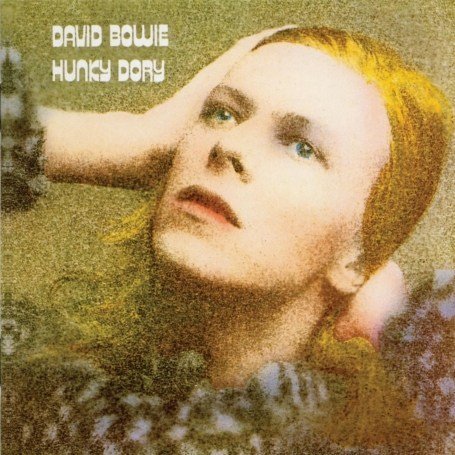
HUNKY DORY


All the nightmares came today and it looks as though they're here to stay

Brimming with invention, Hunky Dory is actually a beautiful dream realized.

Still relatively unknown at this point, Bowie crafted a very intelligent set of songs that would later be held in quite high regard. Better still, the actor within the musician brought a voice to the sessions that conveyed a maturity well beyond his 24 years. At times, his vocals sound cracked as though they were being delivered by a man in the twilight phase of life. There is also a confidence that emanates from every note, beginning with the brilliant "Changes" and following through on each subsequent track until "The Bewlay Brothers" gracefully fades into the run-out grooves.

Now that you've found another key, what are you going to play?

All of the pieces in the puzzle came together for these sessions. We have the "Spiders from Mars" (Mick Ronson, Trevor Bolder and Mick Woodmansey) great tunes and a major label deal. Adopting the trappings of the burgeoning "glam" movement would be the final step toward attaining the fame that would come during 1972 with The Rise and Fall of Ziggy Stardust.

Bowie also enlisted the services of Rick Wakeman, whose virtuosic piano figures prominently throughout. (I wonder if he wore a cape while he was tracking?)

Orchestral and horn arrangements are deployed effectively, augmenting, but never burying, the great melodies on offer. "Oh You Pretty Things" and "Queen Bitch" foreshadow the sound of "Ziggy". Ronson pulls distinctive, crying notes from his Les Paul adding further depth to the powerful, "Life On Mars". These selections, along with "Changes", provide the highlights on a very strong disc. "Kooks" is a charming runner up, taking a stylistic page from Neil Young's "Til the Morning Comes" with well placed horn solos.

Name checking Andy Warhol and Dylan with fulsome tributes, the lyrics are incredibly well developed. Smart without sliding into pretense, he keeps you interested by carefully pruning each line. Verses contain only what is completely necessary. The extra sweat sacrificed to make this happen was well worth it. Music hall quirks, otherworldly noises and an entirely English sensibility all find their place in the mix with a healthy dose of camp. The recipe works well enough to earn Hunky Dory a place in the top five LPs that Bowie would ever produce. Given his distinguished career output, that speaks volumes.

Wednesday, January 30, 2013

IT WAS 44 YEARS AGO TODAY...

January 30th, 1969

The Beatles were at the tail end of the "Get Back" project, which was originally envisioned as a return to the format that produced their first LP. The difference here would be that the group would be filmed bringing in new material, shaping the songs through rehearsal and then playing the new album live.

There are entire books devoted to this episode, which ultimately helped to decide their fate as a functioning unit.

It wasn't all bad

Setting up on the rooftop of 3 Savile Row (Apple headquarters in London) the four most famous faces in the world at that time gave a little lunchtime concert for the business district.

Just how loud did the Beatles play?

Ken Mansfield, who was there amongst the chimney pots, provides his recollection of the set.

"It was loud. I’ve heard recordings of what it sounded like down on the street and I was surprised. Somebody ... that worked at Apple and got there late that day and got locked out ... said they came down the street and they turned onto Savile Row and they said it was like a wall of sound. It was really loud on the street. ... probably about as loud as they could get."

It was the last public performance that the quartet would ever give. When the Let It Be movie was finally released nearly a year and a half after the fact, this segment would close the film.

Rumor has it that we might finally see an official DVD release of Let It Be in 2013. I have been hearing this since 2003, so I'm not holding my breath...

The full monty (audio)


Video for you perverts who like to watch...


Tuesday, January 08, 2013

THE RETURN OF THE THIN WHITE DUKE

Never one to shy away from surprises, David Bowie is marking his 66th birthday by releasing his first new music since 2003. "Where Are We Now?", produced by Tony Visconti, harks back to the time that he had spent in Berlin in the 1970s with an accompanying video featuring black-and-white footage of the city when it was still divided.

His new album, “The Next Day”, will be released in March.

Bowie has been out of the spotlight for the last decade, save for one live appearance in 2006. His musical incarnations during the seventies were always challenging, sometimes confounding but rarely disappointing. When he is on, there are few that rank with him, though his output from the mid 80s onward has been hit and miss. You must hand the man a cigar for continuing to evolve as a musician and writer, rather than sliding comfortably into “greatest hits” territory in the twilight of his career.

Happy Birthday, Mr. Jones! Your return to business is welcome, considering the appalling state of mainstream music.


Saturday, January 05, 2013

LIVING COLOR 2013 TOUR


Living Color plan to mark the 25th anniversary of their hit debut album Vivid with a new reissue and a tour centered around the 1988 album, with initial European dates in the Netherlands, France, Switzerland, Austria and Germany slated for mid=March.

March 10: ECI Cultuurfabriek, Roermond, NL
March 11: Melkweg, Amsterdam, NL
March 13: New Morning, Paris, France
March 15: Z7, Pratteln, Switzerland
March 17: Komma, Innsbruck, Austria
March 20: Huxleys Neue Welt, Berlin, Germany

I'm hoping for announcements concerning North American dates very soon!

Of the original quartet, Corey Glover, Vernon Reid and Will Calhoun are all onboaard with Doug Wimbish taking up bass duties. Their set plan is to play Vivid in its entirety.

Could be that a new record will be forthcoming, as well. All real, new music is quite welcome from where I sit.

Saturday, December 29, 2012

THE BEATLES LIVE IN ATLANTA AUG 18 1965


Just a few days into their second US tour, The Beatles rolled into Atlanta to play to 34,000 people. Opening the trip with their famous Shea Stadium performance to an estimated 56,000 screamers, not a note could be heard over the din.

Atlanta Stadium would be different because of one key factor: Baker Audio, and its Georgia Tech-educated boss, F.B. “Duke” Mewborn. Mewborn handled sound for the show, and his set-up included something that every band utilizes today but was unheard of in the mid sixties.

Monitors

“There were no monitors anywhere else on earth at that time,” said Red Wheeler, a legendary Atlanta rock and roll sound man, now living in Vidalia.

Aiming speakers back toward microphones just wasn't done because of the shrieking feedback loop that would ensue. Mewborn got around this by employing cardioid mics which had a restricted pattern that rejected ambient sound coming from the sides or below. For special events at the stadium Baker had included four Altec 1570 field-level amplifiers, each cranking out about 175 watts of vaccuum tube-powered juice, or about 500 watts in all. These he used to power two stacks of Altec A7 speakers, each with 15-inch woofers.

Never before had the group been able to properly hear what they were playing onstage. The show includes a couple of between-song remarks from both Paul and John concerning the sound. They were probably pleasantly surprised at having a frame of reference in terms of what was being projected out front. Despite this luxury, the age of modern sound technology in large venues was still a few years away. The degree of shoddiness with which the group had to cope with for these big gigs would never be tolerated today. It certainly influenced their decision to quit touring the following year.

The Atlanta show is a step down in fidelity from the Hollywood Bowl tapes but it is an interesting listen. As with all of their shows from this period, the crowd noise is on par with a 747.

Sunday, December 23, 2012

PRESENCE


According to Greek mythology, Achilles was dipped in the river Styx to make him immortal. His mother held him by the heel, however, leaving it vulnerable. Paris would pierce that weak spot with a swift, deadly release of a poison arrow from his bow (guided by Apollo), mortally wounding him. In another version, he was killed by a knife to the back (or heel) by Paris. A great battle raged around the dead Achilles. Ajax held back the Trojans, while Odysseus carried the body away.

Claustrophobic, foreboding shifts between Em9th and F#m(add b6)slowly creep into the stereo image under a fog courtesy of Page, fading into proper sonic focus before the haze is pierced by Bonham's single, authoritative crack on the snare.

This is not a polite tap of the conductor's baton on the rostrum. It is an urgent call to attention. What follows is a brilliant, uneasy 10 minute journey that could very well be their finest moment on record. "Achilles Last Stand" is the centerpiece of a most under-appreciated disc.

Something is wrong, though.

Hitherto, Zeppelin long-players were extremely diverse in terms of style, mood and arrangement. Each member deeply understood dynamics and their telekinetic musical interplay was a key factor in how they successfully put across ideas to a wide audience. Keyboards, acoustic guitars and synths were always welcome. For every "Communication Breakdown" or "Heartbreaker" there was a soft landing pad to be found, with tracks like "That's the Way" or "Going to California".

Presence would do away with this. Prospective listeners applying the stylus to vinyl, encircled by a cloud of opaque smoke would find no soothing "Bron Y Aur" to counterbalance heavier motifs. John Paul Jones stretching out on keyboards? Nowhere to be found.

Without augmentation of any sort, the musicians conveyed the unspoken intensity of the delicate, difficult circumstances that clouded the sessions. Robert Plant and his wife were in a car crash while on holiday in Greece which shattered his leg and ankle. Instead of touring the US, Plant and Jimmy Page wrote the material for Presence, recording in Munich, Germany with Plant confined to a wheelchair.

Page outdid himself, overdubbing a dozen guitar tracks. Jones was a one man, low end orchestra on 8-string bass, while Bonham contributed a relentless foundation with fills that defied gravity.

"There were basically two sections to the song when we rehearsed it. I know John Paul Jones didn't think I could succeed in what I was attempting to do. He said I couldn't do a scale over a certain section, that it just wouldn't work. But it did. What I planned to try and get that epic quality into it so it wouldn't just sound like two sections repeated, was to give the piece a totally new identity by orchestrating the guitars, which is something I've been into for quite some time. I knew it had to be jolly good, because the number was so long it just couldn't afford to be half-baked. It was all down to me how to do this. I had a lot of it mapped out in my mind, anyway, but to make a long story short, I did all the overdubs in one night ... I thought as far as I can value tying up that kind of emotion as a package and trying to convey it through two speakers, it was fairly successful. To be honest with you, the other guys didn't know: 'Has he gone mad? Does he know what he's doing?' But at the end of it, the picture became clear. It was like a little vignette, every time something comes around."

Plant's clever references to the mythical Atlas were doubly interesting as the the Atlas mountains had loomed large in his recent travels and also could be perceived to hold the heavens in place. Relating his own injury to the plight of the mythical Achilles showed that his sense of humor was still intact. The overall effect of this piece of music is stunning. Setting the bar quite high as an opener, the remaining cuts are somewhat overshadowed.

One thing that sets Presence apart from the rest of the Zep's output is that its contents have not saturated the playlists of classic rock radio, which is a definite plus.

For the uninitiated, there is certainly nothing bad etched into these grooves. Elements of past LP formulas are present in that you have a slow, minor key blues ("Tea For One") a muscular, rock arrangement of 1920s blues("Nobody's Fault But Mine") and an epic (the aforementioned "Achilles Last Stand"). Sprinkled in between, there is a detour into quasi-funk syncopation ("Royal Orleans") and Page's fixation with the music that so inspired him as a teen in the "Sun"-drenched "Candy Store Rock". Plant musters his best Elvis vocal mannerisms, though despite his "all-rights" there is a certain vibe in the music that contradicts this.

Then there's the matter of The Object...


Whether you're having a family dinner at the yacht club or simply trying to communicate telepathically with one of your kids, this decorative piece is sure to compliment all occasions.

Lots to dig here if you are a guitarist. Whammy dive bombing on "For Your Life", the "Tea For One" solo and the tasty breaks in "Hots on For Nowhere" all shine brightly. Cynicism creeps into the lyrics in spots, which certainly hadn't been a factor before. There is a slight feeling of having been there and done that groupie. Do what thou wilt transitions into the law of diminishing returns without warning and the sun comes up, yet again, on an all too familiar scene.

Whiskers!

Speed is the operative word in the case of Presence. Takes were captured quickly and left alone. Recording and mixing purportedly took a mere three weeks. It is an interesting snapshot, hastily glued into the Led Zep scrapbook. One worth taking in, nonetheless.

Wednesday, December 12, 2012

RIP RAVI SHANKAR


Another great musician moves on to the next incarnation.

Sitar virtuoso Pandit Ravi Shankar was the Eddie Van Halen of his genre and his hands moved at blinding speed over the instrument. He was a product of the Maihar gharana (school) of Northern Indian classical music which was founded principally by the sarod maestro Ustad Allaudin Khan in the Madhya Pradesh state of India. A sitar can have 21, 22, or 23 strings, among them six or seven played strings which run over the frets. Ravi used the Kharaj-pancham sitar (which has seven played strings).


Through his association with George Harrison, he became world famous in the mid sixties. His was not a shallow pursuit of the limelight by any means. While he was prodigiously talented, musical expression was tied to deep spiritual beliefs.

This was his life.

Practicing for hours each day, it would have been unthinkable for him or his fellow students to go before an audience without having first put in the 10,000 hours required to be great.

Great is an understatement when it comes to his genius.

Shankar was one of a kind. Thanks to him, a large part of the western world has been turned on to the shimmering beauty of classical Indian music.

Here he is with Ali Akbar Khan, August 1971 at the Concert for Bangladesh, performing "Bangla Dhun". Again, it was at his urging that George Harrison took up the task of putting together a benefit to provide relief for refugees from East Pakistan (now Bangladesh), following the 1970 Bhola cyclone and the civil war-related Bangladesh atrocities.

Saturday, December 08, 2012

LENNON


32 years have passed since John Lennon left the planet for parts unknown. Like so many before and after who actively encouraged people to live peacefully, he would probably be frustrated by the continuing state of aggression that still clouds so many areas of the world. Perhaps he would look back and laugh at the wilder aspects of his public life, forgetting the rougher bits. Time may have also allowed him to mend fences with those he had fallen out with. Music? Good or bad, he would have made some more. The Anthology series would have also had a wild card in the pack to weigh in on all things Fab.

Per my own ritual at this time of the year, there will be a few adult beverages and some quality time spent with selections from his rich discography.


Thursday, November 29, 2012

DARK HORSE


Today marks the 11th anniversary of the passing of one George Harrison from the Material World into the next dimension. Still missed here by many.

Saturday, November 10, 2012

BURTON CUMMINGS AT MASSEY HALL


Friday night is a good rock'n'roll night, so here's some straight-ahead, no-brainer rock'n'roll music from the Guess Who days...

Burton Cummings has written some of the most thoughtful, melodic music ever to be unleashed on an unsuspecting public. Possessed of prodigious gifts as a singer, multi-instrumentalist, band leader and composer, he returns to the commercial arena with his latest offering, Massey Hall.

Capturing the excitement of live performance at a venue known for its fine acoustics, Cummings and his band deliver definitive versions of these songs. Better yet, this is not a nostalgia trip nor is there any sense that the star of the show is phoning it in. Newer tunes like "Above the Ground" shine just as brightly as the gems from the Guess Who era or his early solo work.

What you will quickly discern as you listen to this disc is just how damn fresh everything sounds.

His phrasing as a vocalist is impeccable. This is where he leaves a good deal of his contemporaries in the dust in terms of ability. The 21st century crutch of pitch correction software isn't needed when you bring a rare gift to the stage and present it to an audience. Sonically crisp with energy to spare, everything here works like a Swiss watch.

Highlights?

"Hand Me Down World" is particularly grand, giving Kurt Winter's prescient take on legacy items that we leave for the next generation additional weight. It is a pristine rendition that manages to best the original from the Share the Land album. "Stand Tall" is another exceptional moment, though the same can be said for every selection here. Personally, I'm glad that he included "Star Baby" in the set list. Beautifully executed in all respects, Massey Hall is a must own for anyone who fears for the impoverishment of truly great live music.

Performing without a net, Burton Cummings continues to amaze and this release is deserving of every superlative. Don't have it yet? Grab it here


Monday, October 29, 2012

LED ZEP THE SECOND


Leaves are falling all around, It's time I was on my way.
Thanks to you, I'm much obliged for such a pleasant stay.
But now it's time for me to go. The autumn moon lights my way...


Fall of 1969 saw a string of incredible rock albums unleashed within a span of two months (Abbey Road, Arthur, Let It Bleed, Hot Rats, Willy and the Poor Boys, Ummagumma to name a few) Led Zeppelin added a monster to this distinguished list when their second album was issued in late October.

43 years gone...

Have been listening to them a lot of late. Watching the leaves being plucked from the trees by chilly autumn winds always conjures images of Zep II. Here's a re-run of my review from 2009

Just because.

Saturday, October 20, 2012

LONG TIME COMING


Pleasant surprises abound with this collection of very well crafted tunes, courtesy of Rod Delcourt and Wendell Wilson. You are well advised to first go to this link and take up their generous offer to download the disc, free of charge. This is akin to leaving precious gems on the front lawn for the taking.

What will you find here?

Exceptional melodies, well defined, country-folk tinged songs that are sonically sharp and very easy on the ears. Special mention goes to the warm recorded sound of acoustic guitars as well as the great vocal blend of the duo.

Pristine in every way, "It's Only Love" is framed by impeccably picked acoustics with the world weary authority of the lead vocal wrapped in sweet harmonies. Subtle, earthy tones echo the work of the late, great Gene Clark. High praise indeed, though this is a standout track.

Invention colors the set, in terms of how guitar figures are plotted ("Lost", "You Said") though they never lose sight of the hook. More importantly, the iron clad harmonies always tie things together neatly and they have a well-honed sense of presentation. None of the material on Long Time Coming overstays its welcome, with all possible loose ends taken care of in the overall mix. Thoughtful lyrics only serve to ice the cake.

This is a thoroughly enjoyable listen in all respects. You will not be assaulted by miles of over-playing or self-indulgence. On the contrary, the sounds will gently work their way into your head, begging to be played again. It is a pity that more mainstream artists are not following the lead of indie acts in getting away from the clanging, artificial noise of the digital realm. This disc is a quiet reminder of just how powerful raw talent can be as opposed to the button-pushing trappings of software-driven "product".

Do yourself a favor and put Long Time Coming at the top of your playlist.

Thursday, October 18, 2012

CHUCK BERRY AT 86


Rock 'n' roll poet, guitarist, singer, legend.

He has had his share of personal troubles, career peaks/valleys, legal hassles and has a well-founded reputation as being "difficult" to work with. Despite all of this, the guy is a survivor, still doing gigs (!) and is one of the founding fathers of rock as we know it.

Chuck Berry was born on this date in 1926.

May he duck-walk into his nineties!


Sunday, October 07, 2012

ABACAB: GENESIS REINVENTED


For Genesis fans who discovered the band as it had emerged in the early seventies, the departure of Peter Gabriel is considered to be an event from which the group never fully recovered. While the quintet made some great music, the level of acclaim for their efforts was restricted to a much smaller audience at that time. Emerging from the background, drummer Phil Collins stepped into the open lead vocalist slot, sounding not unlike Gabriel early on. Contrary to what their detractors had to say, the musicians' creative continuity remained intact and their commercial fortunes increased.

Within two years, guitarist Steve Hackett also made his exit.

AND THEN THERE WERE THREE

Showing no sign of distress, the trio of Banks, Rutherford and Collins closed out the seventies on a high note, making two albums that certainly rank amongst their best. For touring purposes, they were augmented by two gifted players, drummer Chester Thompson and guitarist Darryl Stuermer. A shift away from long form pieces began at this point, with Collins now taking up more of a share in the writing duties. Coming together to devise a follow up to Duke in 1981, there was one prevalent theme that dominated the sessions.

Change

Several factors led them down the path that would influence the making of their eleventh disc. All three men had recently indulged in solo recordings, each enjoying the opportunity to stretch out and do something outside of the expected. Surprisingly, Collins would score in a big way with the Face Value LP and the single "In the Air Tonight".

Phil had also played on former bandmate Peter Gabriel's third release(self-titled like the first two, distinguished by "melting face" cover art), thus forging the infamous gated drum sound, abetted by Steve Lillywhite and Hugh Padgham. Both this innovation and Padgham would figure prominently in the next phase of their development.

Seemingly energized by their recent extracurricular endeavors, they now regrouped to jam and quickly discovered that they were fed up with sounding like...Genesis.

What happens to a band when they no longer wish to play to type?

ANOTHER RECORD

Any sonic reference to what they had done previously now went out the window. Even the design chosen for the sleeve was a 180 degree turn from the past, consisting of random blotches of color.

Abstract-acab!

Catchy melodies, in-your-face drums, horns, icy synthesizers, repetitive riffs on loops and drum machines all took center stage. The result was entirely worthwhile with a few concessions to those who favored their progressive ideas ("Dodo/Lurker") but served to underscore their growing commitment to a more straight ahead pop/rock format("Abacab", "No Reply At All").

Tony: "We tried to make our writing process ... more straightforward. So we got rid of the big choruses and the keyboard solos aiming to hone everything down.“

Phil saw another aspect: "From Duke on, we wrote more as a unit. On Abacab, we brought in one song each and after that there were no individual songs. This gave Genesis a genuine reason to carry on besides the solo careers."

Balancing "art" with accessibility would see a lot of their older followers check out in disgust. Many more flocked to the band, digging the new direction. Had they not moved forward, Genesis probably would have called it off at this point. No less than four singles were issued, with the title song charting high on both sides of the Atlantic. "No Reply At All", with a nimble Rutherford bass line that saw him running high up the fretboard where the air gets thin, also had a super strong hook line supported by the razor sharp Earth, Wind and Fire horn section. Radio loved it, providing maximum airplay.

Of the remaining two 45s, "Keep It Dark" rides high on a memorable guitar figure, underpinned by Collins' relentless, steady thump which was itself was looped and supported by clanging percussive effects. It is the lyric that deserves special mention, as it is one of the most fully realized in the set. Concerning a man who is abducted by aliens, he cannot reveal where he went or the wonders he saw for fear of being ridiculed. Instead, he invents a story that he was kidnapped for money and let go when he's found to have no great fortune to extract. An excellent song in every respect. Spent quality time with ETs? Keep it dark, mate.

"Man On the Corner" prefigures the eventual transition of Phil Collins from prog-rock drummer/vocalist to one of pop's biggest hit-makers of the 1980s. Heralded by a simple drum program and keys that provide the refrain immediately, this hidden gem from side two builds to an emotional crescendo before it fades.

You also get a glimpse of the treacle-laden ballads that Collins would soon churn out with regularity, assuring him massive mainstream success and cries of "sellout" from the old guard. All of this was still a couple of years away for Phil, though.

Abacab still found room for multi-part works that took a strange turn. Witness the rich, keyboard driven fantasy of "Dodo/Lurker" with the sublime bordering on nonsense for subject matter and a treasure trove of inventive organ and synth wizardry from Banks. All is nicely balanced, with Collins affecting some odd vocal mannerisms. "Me and Sarah Jane" is another one that stretches out, replete with a multitude of chord, key signature and timing shifts, yet there is still a terrific melodic sense at its core. For anyone who might think that any of these selections ("Abacab" included) run long, I invite you to velcro yourself to a chair and sit through "Supper's Ready" or "The Battle of Epping Forest" from the Gabriel era. The lads are pretty concise here by comparison.


One point on which Genesis devotees from any era could find common ground on is the sheer existence of the lone clunker here, "Who Dunnit?" It is an excruciating ear-worm which in no way should have been allotted 3 minutes and 25 seconds of space to annoy prospective listeners.

Curiously, they did have a few tunes in the can from these sessions which could have been readily substituted. Instead they were packaged the following year as part of the 3 X 3 EP.


That cover remind you of anything?

Two EP cuts, "Paperlate" and "You Might Recall" would have greatly enhanced the finished LP, with "Who Dunnit?" making for a nice joke B-side instead.

That all being said, Abacab was a pretty brave move for these guys. Quite calmly, they resolved to turn their back on the legacy they had built, raise a giant middle finger up to all and make a record that truly pleased them. There is no middle ground here. Some crowds roundly booed the material when they first played it live. As previously mentioned, others flipped and swore off the band for good. I was introduced to this one through a friend who gave me a very clean cassette version that he made from his older brother's vinyl copy. It made a huge impression on my then 14 year old brain, right from the opening crash into the hypnotic title track. This is art/rock with pop leanings at its finest. Has it held up well?

You bet!


POSTSCRIPT

It must be stated that their partnership with engineer Hugh Padgham paid handsome dividends in terms of how sharply defined their sound became. Padgham had worked with XTC and The Police, bringing with him a fresh energy into the recording sessions. Drums to the fore in the mix to make them sound more vibrant was but one of the tricks that made the new stuff seemingly leap from the speaker grills. He would remain an integral part of the team for their next two projects, both of which were wildly successful despite dwindling artistic merits.

For those who like to dig deeper, there is a great bootleg (Abacab-Complete 2nd Edition) that captures material excised from the final master, including a third section to "Dodo/Lurker" called "Submarine".

By the way, what the hell is an Abacab?

Let's allow Mike, Phil and Tony the final word on that.

Tuesday, October 02, 2012

THE KINGSTON SPRINGS


The Kingston Springs have just independently released their debut full-length album, aptly titled, The Kingston Springs, TODAY. To hear the album in full, stream it on Soundcloud.

Check out the first single, "Lowest of Animals". The track was inspired by the Mark Twain essay, "The Lowest Animal", and features Nashville gospel/soul singer LaShanda Evans on background vocals. It's a great tune. Another highlight is "Weight of This World". Overall, I'm really digging everything that I have heard so far.


So where can you purchase The Kingston Springs?

It is available online through iTunes, Amazon, eMusic, Zune, Rhapsody, Bandcamp ,etc.) and at select record stores today. The album is also available to stream on Spotify.

The band performed at Starry Nights Music & Arts Festival this past weekend in Bowling Green, KY with Cage the Elephant, The Whigs, JEFF The Brotherhood, Manchester Orchestra, and more. The Kingston Springs are opening for Trampled By Turtles at Lightning 100's upcoming Live On The Green, this Thursday, October 4 in Nashville, TN. The band will also perform at CMJ in New York City on October 19.

Current tour schedule is below, with more dates being booked:

Sept 28 - Midpoint Music Festival - Cincinnati, OH
Sept 29 - Starry Nights Music Festival - Bowlling Green, KY
Oct 4 - Live on the Green - Nashville, TN
Oct 5 - High Watt (Marcus & Colvin Soundland Showcase) - Nashville, TN
Oct 9 - JJ's Bohemia - Chattanooga, TN
Oct 10 - Preservation Pub - Knoxville, TN
Oct 11 - The Basement / Graveyard Tavern - Atlanta, GA
Oct 12 - Georgia Theater - Athens, GA
Oct 13 - Fall for Greenville - Greenville, SC
Oct 19 - Official CMJ Showcase @ Fat Baby - NYC
Oct 22 - Brooklyn Bowl - NYC
Oct 25 - The Evening Muse - Charlotte, NC
Oct 27 - The Satellite Bar & Lounge - Wilmington, NC